
Call Us Today!
Blog
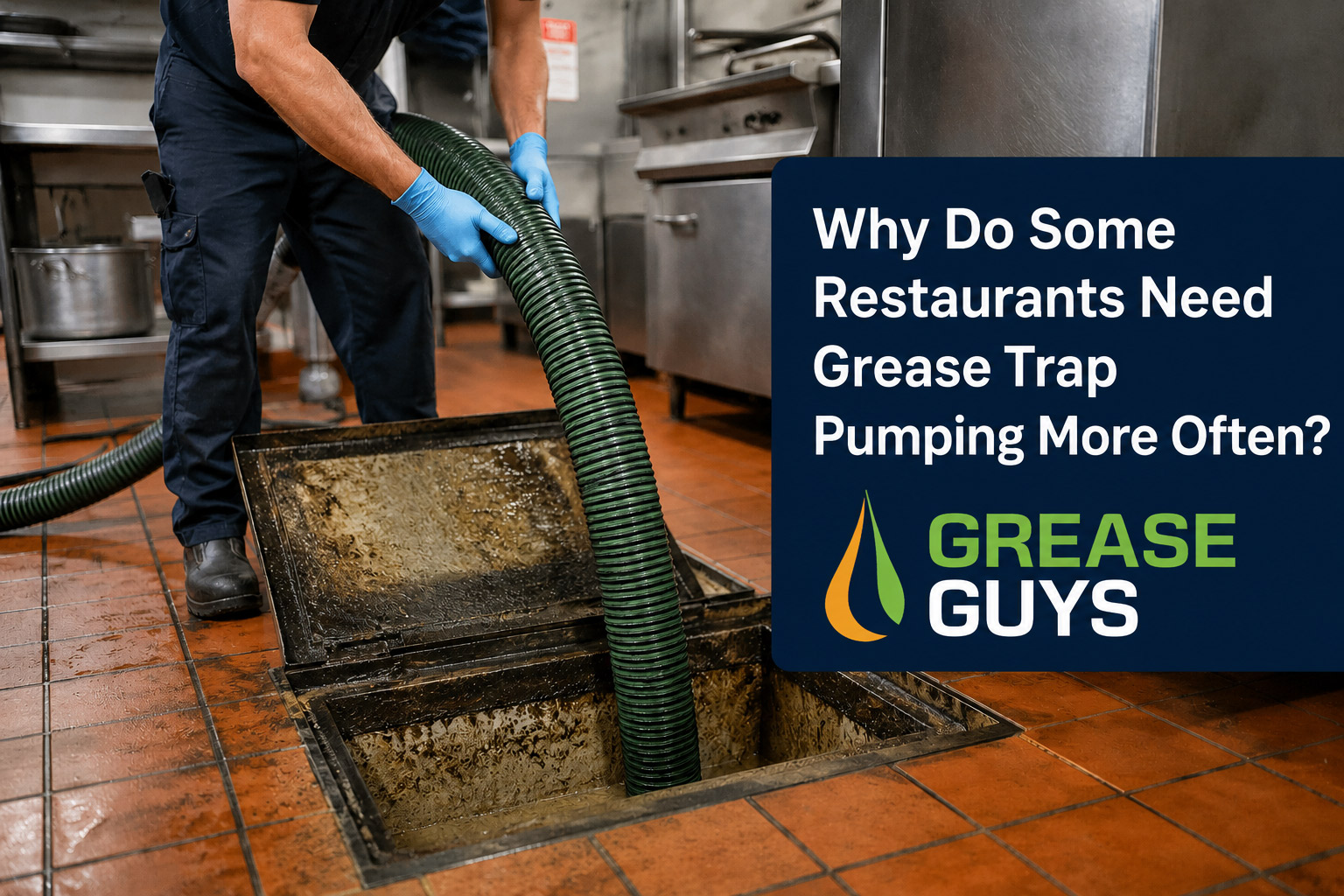
Why Do Some Restaurants Need Grease Trap Pumping More Often?
Introduction
A breakfast café, a burger restaurant, and a seafood kitchen can all have grease traps that are technically the same size.
That does not mean they will fill at the same speed.
Restaurant owners sometimes compare pumping schedules with nearby businesses and assume something is wrong when their trap needs service more frequently. In reality, grease trap demand is heavily influenced by what actually happens inside the kitchen every day. The menu, cooking methods, prep workflow, cleaning routines, and customer volume all change how much grease enters the system.
A restaurant frying food continuously during lunch and dinner rushes creates a very different type of waste load than a café mostly preparing baked goods and coffee drinks. Even the way staff handle oil disposal and dishwashing can affect how quickly grease accumulates inside the trap.
For commercial kitchens throughout Washington, pumping frequency is less about following a universal schedule and more about understanding how the kitchen’s daily operation affects grease buildup over time.
The Menu Has a Bigger Impact Than Many Owners Realize
The type of food a restaurant serves directly affects how much grease enters the plumbing system.
A kitchen preparing grilled meats, fried foods, creamy sauces, or oily ingredients throughout the day naturally produces heavier grease waste than restaurants with lighter preparation methods.
High-Grease Menus Usually Fill Traps Faster
Restaurants commonly requiring more frequent pumping often include:
Fried chicken restaurants
Burger kitchens
Seafood restaurants
BBQ operations
High-volume diners
These kitchens typically generate larger amounts of fats, oils, and grease during both cooking and cleanup.
On the other hand, cafés, bakeries, or lighter-service kitchens may place less daily strain on the grease trap system even during busy periods.
Dishwashing Habits Affect Grease Accumulation
Grease traps collect more than cooking oil alone.
A large amount of buildup actually comes from what enters the sink during dishwashing and cleanup.
Poor Scraping Practices Increase Buildup
When food waste is rinsed directly into sinks instead of being properly discarded first, the grease trap must separate:
Food solids
Grease particles
Oil residue
Wastewater
This combination accumulates much faster than grease alone.
Restaurants in Washington with inconsistent cleanup procedures often experience faster buildup even if their cooking volume is moderate.
Hot Water Does Not Eliminate Grease Problems
Some kitchen staff assume flushing drains with hot water solves grease issues because the grease appears to dissolve temporarily.
In reality, heated grease often moves farther into the system before cooling and separating again inside the trap or plumbing lines.
That can sometimes make buildup harder to manage over time.
Kitchen Volume Changes Everything
Two restaurants serving the same menu may still require different pumping schedules depending on customer traffic.
A smaller restaurant operating steadily throughout the week may produce far less grease waste than a high-volume location handling constant rush periods every day.
The difference is not just cooking quantity. Higher traffic usually also means:
More dishwashing cycles
More sink usage
More floor cleaning
More food prep waste
More oil disposal activity
All of that contributes to faster grease accumulation inside the system.
Grease Trap Size Does Not Always Match Kitchen Demand
Some restaurants simply outgrow the grease trap system originally installed in the building.
This happens often in older restaurant spaces throughout Washington where previous tenants operated very different types of food service businesses.
For example, a small café space converted into a busy fried-food kitchen may suddenly place far heavier demand on an existing grease trap than the system was originally designed to handle.
Signs the Trap May Be Undersized
The following problems sometimes indicate capacity issues:
Frequent slow drains
Odors returning quickly after pumping
Overflow during busy periods
Grease buildup occurring unusually fast
Recurring plumbing backups
In these situations, pumping frequency increases because the trap reaches capacity much sooner during normal operation.
Staff Training Influences Maintenance Frequency
Grease trap performance is affected heavily by daily kitchen habits.
Restaurants with strong staff procedures often reduce unnecessary grease buildup substantially compared to kitchens where waste handling is inconsistent.
Operational Habits That Affect Grease Trap Performance
Even small operational improvements may extend the time between pumping appointments.
Some Kitchens Produce More Wastewater Than Others
Grease accumulation is not only about oil volume.
Restaurants generating large amounts of wastewater may also push more suspended grease particles through the system daily.
High-water-use kitchens often include:
Full-service restaurants
Large prep kitchens
Catering facilities
Institutional food operations
Frequent sink use increases how much material passes through the grease trap every day, even if grease concentration itself is not unusually high.
Delaying Pumping Often Creates Larger Problems
Some restaurant owners try extending pumping intervals to reduce maintenance expenses.
Unfortunately, overloaded grease traps often create much more expensive problems later.
As grease and solids accumulate beyond capacity, the system may struggle to separate waste effectively. This increases the risk of:
Drain blockages
Foul odors
Plumbing backups
Overflow problems
Emergency service calls
In some cases, excessive buildup may also contribute to compliance concerns during inspections.
Seasonal Demand Can Affect Pumping Frequency
Some restaurants in Washington experience major seasonal traffic fluctuations throughout the year.
A waterfront seafood restaurant during tourist season may generate dramatically more grease waste during peak months than during slower periods.
Likewise, sports venues, event-focused businesses, and holiday-heavy restaurants often experience periods where grease trap demand increases sharply for several weeks at a time.
This is why pumping schedules sometimes need adjustment throughout the year rather than staying fixed permanently.
Preventative Maintenance Usually Costs Less Than Emergency Repairs
Grease traps rarely fail all at once.
Most serious problems begin with gradual buildup that limits flow efficiency over time. Restaurants that schedule pumping based on actual kitchen demand are generally less likely to experience:
Emergency plumbing disruptions
Kitchen downtime
Overflow incidents
Major drain blockages
Preventative service often helps kitchens operate more consistently during busy periods when plumbing failures become especially disruptive.
Frequently Asked Questions
Why do some restaurants need grease trap pumping more often?
Kitchen volume, menu type, dishwashing habits, grease output, and trap size all affect how quickly buildup accumulates.
Do fried food restaurants require more frequent pumping?
Yes. Restaurants preparing large amounts of fried food usually generate more grease waste during cooking and cleanup.
Can staff habits affect grease trap performance?
Absolutely. Poor scraping practices and improper oil disposal may increase buildup significantly.
What happens if a grease trap is pumped too late?
Overloaded grease traps may lead to drain blockages, foul odors, plumbing backups, and overflow problems.
Can seasonal business changes affect pumping schedules?
Yes. Restaurants with fluctuating customer traffic may require different pumping frequencies during peak seasons.
Conclusion
Some restaurants need grease trap pumping more often because kitchen operations vary dramatically from one business to another. Menu type, customer volume, dishwashing practices, wastewater output, and staff habits all influence how quickly grease and solids accumulate inside the system.
For restaurants throughout Washington, understanding how daily operations affect grease buildup helps owners plan maintenance schedules more effectively and reduce the risk of disruptive plumbing problems later. A pumping schedule that works for one kitchen may not be appropriate for another operating under completely different conditions.
AtGrease Guys, restaurants across Washington can learn more about grease trap cleaning and maintenance solutions designed to support cleaner, more reliable commercial kitchen operations.

OUR SERVICES
TIPS & ARTICLE
GET IN TOUCH
Phone: (855) 227-6060
Email: [email protected]
Address: 3188 Road M.2 NE, Moses Lake, WA 98837
Business Hours:
Mon - Sun: Open 24 Hours
AREAS WE SERVE
© All Rights Reserved • Grease Guys, LLC | Terms of Use | Privacy Policy