
Call Us Today!
Blog
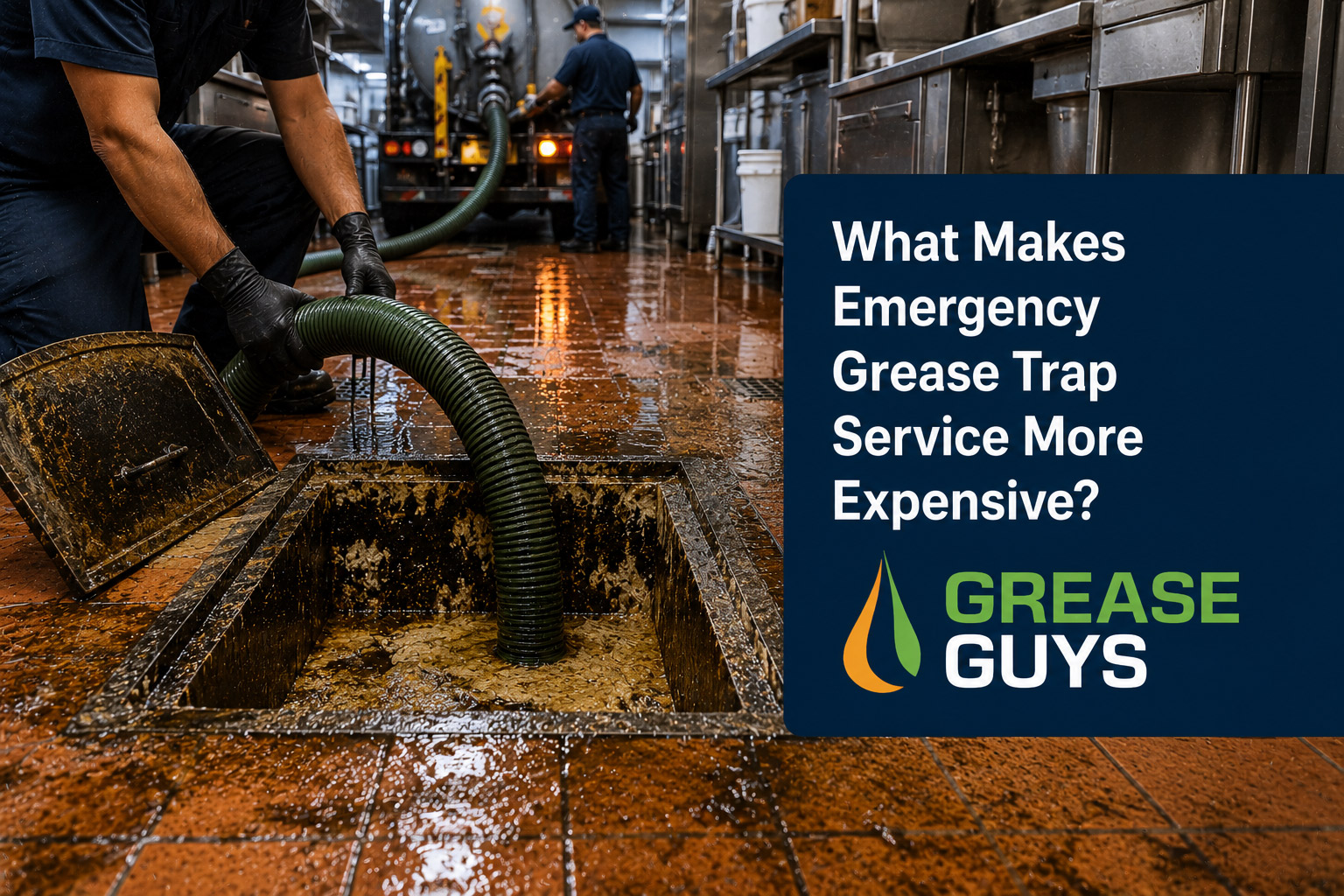
What Makes Emergency Grease Trap Service More Expensive?
Emergency Grease Problems Rarely Happen at Convenient Times
Most restaurants do not schedule emergency grease trap service because they want to. It usually happens after something has already gone wrong during normal operations.
A floor drain suddenly backs up during dinner service. Wastewater starts pooling near sinks in the middle of a busy shift. A strong grease odor spreads through the kitchen right before a health inspection. In many cases, the restaurant was already dealing with smaller warning signs beforehand, but the issue finally reached the point where immediate action became unavoidable.
Emergency grease trap service costs more because the situation itself is more difficult, more urgent, and often more severe than routine maintenance. Technicians may need to respond after hours, work around active kitchen operations, handle overloaded systems, or address plumbing problems that have already spread beyond the grease trap.
For restaurants and commercial kitchens in Washington, understanding why emergency grease trap service becomes more expensive can help reduce the risk of unexpected repair bills and operational downtime.
Emergency Service Requires Immediate Response
One of the biggest differences between routine maintenance and emergency service is timing.
Scheduled grease trap cleaning allows technicians to plan routes, allocate equipment efficiently, and complete service under controlled conditions. Emergency calls do not offer that flexibility.
After-Hours and Weekend Dispatches
Many grease emergencies happen outside normal business hours because restaurants are busiest during evenings, weekends, and holidays.
Emergency response during these periods often involves:
Overtime labor
Immediate technician dispatch
Rearranged service schedules
Additional travel coordination
Rapid equipment mobilization
Because the response is urgent, labor costs are usually higher than standard scheduled service.
Service Interruptions Require Faster Action
When grease-related problems begin affecting kitchen operations, restaurants often need immediate resolution to continue serving customers safely.
A blocked drain or overflowing grease trap can disrupt:
Dishwashing stations
Prep sinks
Floor drains
Kitchen sanitation
Wastewater flow
Emergency technicians may need to prioritize the call ahead of routine appointments, which increases operational costs for the service provider.
Severe Grease Buildup Takes Longer to Remove
Most emergency grease trap calls involve systems that are already heavily overloaded.
A regularly maintained grease trap is generally straightforward to pump and clean. Emergency situations are different because the buildup has often been accumulating for much longer.
Hardened Grease Complicates Pumping
When grease sits inside the trap too long, it thickens and hardens.
Instead of removing mostly liquid waste, technicians may need to break apart dense grease layers manually before pumping can begin efficiently. Thick sludge and compacted waste increase labor time substantially.
Washington restaurants that delay grease trap cleaning too long often experience this problem once the trap reaches capacity.
Food Waste and Debris Increase Labor
Emergency grease traps frequently contain large amounts of trapped food waste along with grease buildup.
This combination creates heavier sludge that is more difficult to remove than grease alone. Excess solids may slow pumping equipment and require additional manual cleaning.
The more severe the buildup becomes, the more involved the service process usually is.
Plumbing Problems Often Extend Beyond the Grease Trap
Emergency service costs rise significantly once grease begins affecting nearby plumbing systems.
In many cases, the grease trap itself is no longer the only issue.
Blocked Drain Lines
Overflowing grease traps often allow fats, oils, and grease to move deeper into plumbing lines.
As grease cools inside pipes, it hardens and narrows the drainage system. This can create blockages that affect sinks, floor drains, or sewer lines throughout the kitchen.
Technicians may need to perform additional services such as:
Drain clearing
Hydro jetting
Pipe descaling
Sewer line cleaning
These procedures add both labor and equipment costs to the emergency visit.
Wastewater Backups Increase Cleanup Requirements
If wastewater begins backing up into the kitchen, cleanup becomes part of the emergency response.
Restaurants may need sanitation procedures to address:
Standing wastewater
Contaminated flooring
Overflow around drains
Grease residue
Odor control
Cleanup work often increases service time considerably.
Accessibility Problems Can Increase Emergency Costs
Grease trap accessibility matters even more during emergency situations.
Technicians working under urgent conditions may face additional challenges depending on where the system is located.
Difficult Equipment Access
Some grease traps are positioned:
Beneath kitchen equipment
Behind storage areas
Under access panels
Far from parking access
In confined utility spaces
Emergency service becomes slower and more labor-intensive when technicians cannot easily reach the system.
Limited Space During Active Operations
Restaurants sometimes request emergency service while the kitchen is still operating.
Working around staff, customers, deliveries, or active cooking stations can slow the service process and increase overall labor requirements.
Delayed Maintenance Is One of the Biggest Cost Factors
Many emergency grease trap problems begin with postponed maintenance.
Restaurants often notice smaller warning signs before the situation becomes urgent.
Early Warning Signs That Often Get Ignored
Common indicators include:
Slow-draining sinks
Grease odors
Gurgling drains
Minor backups
Frequent clogs
These problems usually indicate grease accumulation is already affecting the system.
When maintenance continues getting delayed, the situation often escalates into a larger emergency requiring more expensive service.
Routine Maintenance Is Usually Less Expensive
Regular grease trap cleaning helps remove buildup before major plumbing problems develop.
Compared to emergency response, scheduled maintenance is typically:
The longer grease buildup remains untreated, the greater the chance of additional repair costs.
How Restaurants Can Reduce Emergency Service Costs
Avoiding grease emergencies is usually more affordable than responding to them after operations are disrupted.
Maintain a Consistent Cleaning Schedule
Grease traps should be cleaned based on actual kitchen usage, not only when visible problems appear.
High-volume Washington restaurants often require more frequent service because grease accumulates faster during busy operations.
Train Staff to Recognize Early Problems
Kitchen staff should understand how to identify early drainage issues before they become emergencies.
Prompt reporting of slow drains or grease odors can help businesses address problems sooner.
Manage Grease Disposal Properly
Pouring oil directly into drains or allowing excessive food waste into the system increases grease buildup speed significantly.
Consistent disposal procedures help reduce strain on grease traps and plumbing systems.
Frequently Asked Questions About Emergency Grease Trap Service
Why does emergency grease trap service cost more?
Emergency service often involves after-hours labor, urgent dispatch, severe grease buildup, and additional plumbing or cleanup work.
Can delayed grease trap cleaning cause emergencies?
Yes. Delayed maintenance allows grease buildup to grow until drainage problems, backups, or overflows occur.
What plumbing problems can grease buildup cause?
Grease can block pipes, restrict wastewater flow, damage sewer lines, and create recurring drainage issues.
Do emergency grease problems shut down restaurants?
In severe situations, wastewater backups or sanitation issues may temporarily interrupt kitchen operations.
How can restaurants reduce emergency grease trap costs?
Routine cleaning, proper grease disposal, and responding early to drainage issues help reduce the risk of emergency service calls.
Conclusion
Emergency grease trap service is usually more expensive because the situation has already escalated beyond routine maintenance. Severe grease buildup, blocked plumbing lines, wastewater cleanup, and urgent response requirements all increase the complexity of the job.
For restaurants and commercial kitchens in Washington, staying proactive with grease trap maintenance is often the best way to reduce unexpected service costs and avoid disruptions during busy operating hours. Addressing smaller warning signs early can help prevent much larger plumbing and cleanup expenses later.

OUR SERVICES
TIPS & ARTICLE
GET IN TOUCH
Phone: (855) 227-6060
Email: [email protected]
Address: 3188 Road M.2 NE, Moses Lake, WA 98837
Business Hours:
Mon - Sun: Open 24 Hours
AREAS WE SERVE
© All Rights Reserved • Grease Guys, LLC | Terms of Use | Privacy Policy