
Call Us Today!
Blog
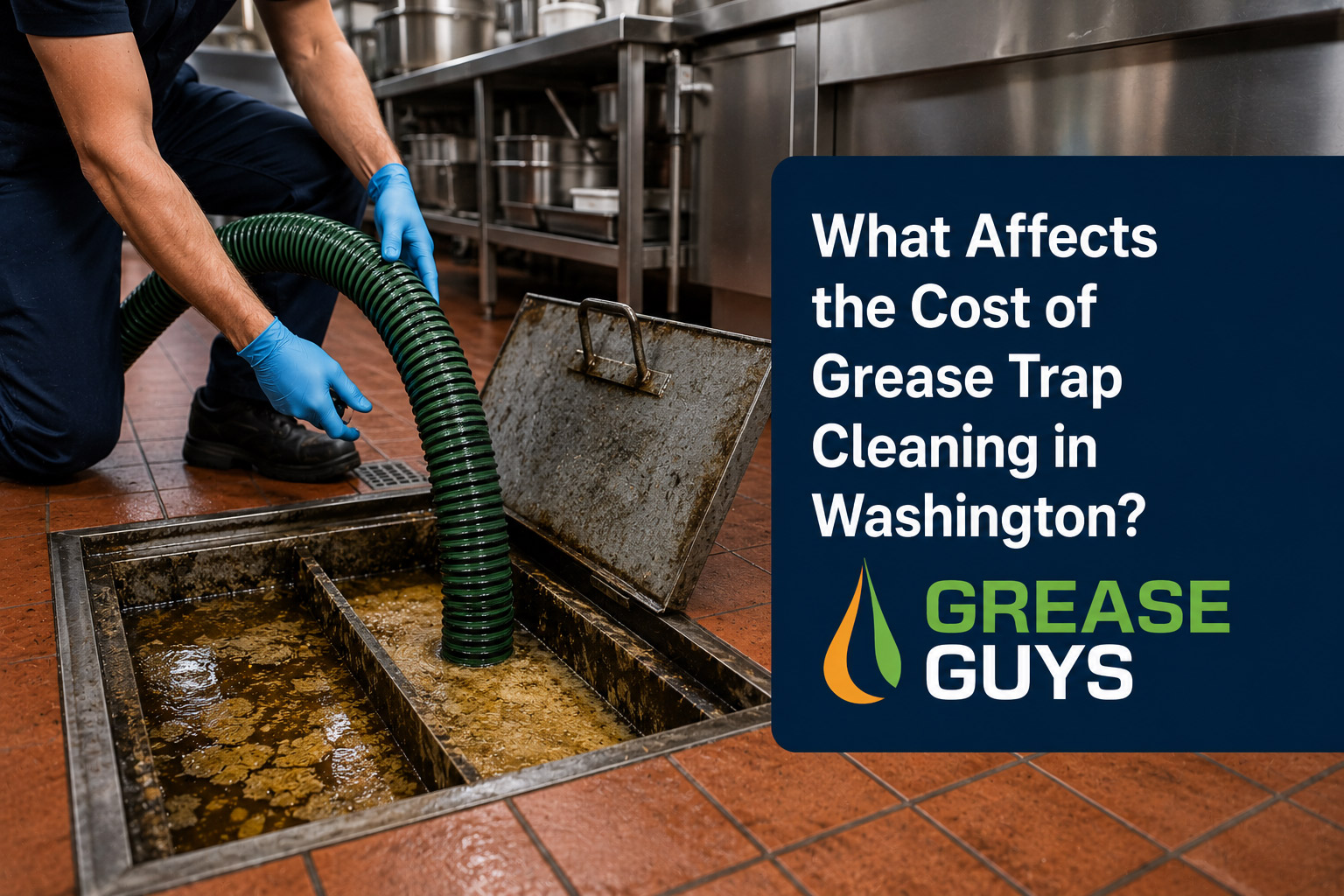
What Affects the Cost of Grease Trap Cleaning in Washington?
Why One Restaurant Pays More Than Another for the Same Service
A restaurant with a small grease trap that gets cleaned regularly may only need a quick service visit every few weeks. Another kitchen across town might need a larger vacuum truck, longer pumping time, and extra labor just to remove hardened grease buildup from an overloaded interceptor.
Both businesses are technically paying for grease trap cleaning, but the actual work involved can be completely different.
That is why grease trap cleaning costs in Washington can vary so much between restaurants, food trucks, cafés, commercial kitchens, and large food service facilities. Pricing is usually affected by how much grease the kitchen produces, how accessible the trap is, how often maintenance happens, and whether the system already has drainage or buildup problems.
For many businesses, the biggest factor is not the trap itself. It is how the system has been maintained over time.
Grease Trap Size Changes the Scope of the Job
The physical size of the grease trap is one of the first things that affects pricing.
Smaller indoor units are generally faster to clean because they hold less waste and are easier to access. Larger exterior interceptors take longer because they contain higher grease volumes and require larger pumping equipment.
A coffee shop with a compact under-sink trap will not require the same amount of labor as a large restaurant handling heavy dinner traffic every day.
Indoor Grease Traps
Indoor systems are common in smaller Washington food businesses such as cafés, bakeries, and sandwich shops.
These traps are usually:
Easier to access
Faster to pump
Lower in waste volume
Simpler to maintain
However, indoor traps can still become expensive if maintenance is inconsistent or if grease accumulates too quickly.
Exterior Grease Interceptors
Larger food service operations often rely on outdoor interceptors capable of handling high wastewater flow.
Cleaning these systems may involve:
Larger vacuum trucks
Longer pumping times
Additional labor
Heavier grease disposal
More extensive cleaning procedures
Because the workload is larger, the service cost typically increases as well.
The Amount of Grease Buildup Matters
A grease trap that receives regular maintenance is much easier to clean than one that has been neglected for months.
The condition of the trap before service heavily affects labor time and difficulty.
Hardened Grease Takes Longer to Remove
Fresh grease is easier to pump than old, compacted buildup.
When grease sits inside a trap for too long, it thickens and sticks to internal surfaces. Technicians may need additional time to scrape walls, remove solidified material, and fully clean the system.
In Washington commercial kitchens with high grease production, delayed maintenance can significantly increase cleaning time.
Food Waste Inside the Trap
Grease traps are designed to separate fats, oils, and grease from wastewater, not to function as garbage containers.
When food scraps regularly enter the system, they combine with grease and create dense sludge that is harder to remove.
Kitchens that do not scrape plates properly often experience:
Faster trap saturation
Stronger odors
More difficult pumping
Higher cleaning costs
This is especially common in busy kitchens where staff rush disposal procedures during peak hours.
Severe Odor Conditions
Older grease buildup can begin decomposing inside the trap.
Once this happens, the cleaning process becomes more difficult because the waste is more concentrated and the trap environment becomes harsher to work in. Extra cleaning effort may be needed to fully restore proper function.
Kitchen Volume Directly Affects Maintenance Costs
The type of restaurant operation plays a major role in grease production.
Some kitchens naturally generate far more grease than others.
High-Output Kitchens Usually Need More Frequent Service
Restaurants that fry foods constantly or cook with heavy oils often fill grease traps quickly.
This includes:
Fast food restaurants
Fried chicken kitchens
Seafood restaurants
Buffets
Large commercial kitchens
These businesses often require more frequent grease trap cleaning in Washington simply because they process higher wastewater volumes every day.
More frequent cleaning increases yearly maintenance costs, but it also reduces the risk of emergency plumbing problems.
Lower-Grease Operations
Certain food businesses produce grease more slowly.
For example, smoothie shops, cafés, bakeries, and some prep kitchens may not stress their systems as heavily as high-volume restaurants.
Their grease traps often stay manageable longer, which can reduce service frequency. However, delaying maintenance too long can still create drainage and plumbing issues regardless of kitchen type.
Accessibility Can Increase Labor Time
Some grease traps are simple to reach. Others are not.
Accessibility affects how efficiently technicians can perform the service.
Difficult Trap Locations
Grease traps located in hard-to-reach areas may require additional labor.
Examples include traps positioned:
Beneath heavy equipment
Inside tight utility spaces
Under flooring access panels
Far from truck access points
Behind storage areas
The more difficult the setup is to access safely, the longer the cleaning process may take.
Distance From Pumping Equipment
Exterior interceptors positioned far from parking or service access areas may also affect costs.
Longer hose runs and complicated access routes can increase setup time and labor requirements during service visits.
Cleaning Frequency Often Determines Long-Term Costs
Businesses sometimes focus only on the immediate service invoice without considering how maintenance habits affect future costs.
Regular grease trap cleaning is usually less expensive over time than dealing with neglected systems.
Consistent Maintenance Keeps Service Simpler
When a grease trap is cleaned routinely, technicians can remove buildup before it becomes severe.
This usually means:
Faster service appointments
Lower risk of plumbing issues
Easier pumping
Reduced emergency calls
Better system performance
Restaurants that stay proactive often avoid major repair expenses later.
Delayed Service Can Trigger Additional Problems
Waiting too long between cleanings increases the chance of drainage problems and plumbing failures.
Once grease begins affecting nearby pipes or sewer lines, costs can rise quickly.
What starts as postponed maintenance can eventually become a much larger operational expense.
Local Regulations and Disposal Requirements
Commercial kitchens in Washington must follow proper grease disposal practices.
Waste collected from grease traps cannot simply be discarded anywhere. Service providers must transport and dispose of grease material according to regulations.
Disposal requirements may affect pricing depending on:
Waste volume
Grease condition
Service frequency
Disposal facility costs
Businesses generating larger amounts of grease waste often face higher disposal-related service costs.
How Restaurants Can Keep Grease Trap Costs More Manageable
Reducing grease trap cleaning costs is usually more about prevention than cutting corners.
Several operational habits can help kitchens control maintenance expenses over time.
Keep Solid Waste Out of Drains
Food scraps create thicker sludge inside grease traps and increase cleaning difficulty.
Training staff to scrape plates and dispose of food waste properly helps reduce buildup speed.
Avoid Waiting Until Problems Appear
Many restaurants wait until they notice odors or slow drains before scheduling service.
By that point, buildup may already be severe.
Routine maintenance is generally less disruptive and more affordable than emergency service.
Match Cleaning Frequency to Kitchen Output
Restaurants should adjust cleaning schedules based on actual grease production, not just minimum recommendations.
A busy Washington kitchen may require more frequent service during seasonal rush periods or high-volume months.
Frequently Asked Questions About Grease Trap Cleaning Costs
Why do grease trap cleaning prices vary so much?
Pricing depends on trap size, grease buildup, kitchen volume, accessibility, and how often the system is maintained.
Does delaying grease trap cleaning increase costs?
Yes. Delayed cleaning often leads to heavier buildup, longer service times, plumbing issues, and emergency repair expenses.
How often should restaurants clean grease traps?
The ideal schedule depends on grease production and kitchen activity. High-volume Washington restaurants usually require more frequent service.
Can food waste increase grease trap cleaning costs?
Yes. Excess food debris creates thicker sludge that takes longer to remove and can increase labor requirements.
Are larger grease interceptors more expensive to clean?
Generally, yes. Larger systems hold more waste and require larger equipment, longer pumping times, and additional labor.
Conclusion
The cost of grease trap cleaning in Washington depends on much more than the size of the tank alone. Kitchen volume, maintenance history, grease buildup, accessibility, and overall system condition all affect how involved the service becomes.
Restaurants that stay consistent with maintenance often avoid the higher costs associated with neglected systems, emergency plumbing issues, and severe grease accumulation. In many cases, routine cleaning is far less expensive than dealing with the operational problems that follow delayed service.
Grease Guys works with restaurants, cafés, commercial kitchens, and food service businesses throughout Washington to help keep grease trap systems operating cleanly and efficiently over time.

OUR SERVICES
TIPS & ARTICLE
GET IN TOUCH
Phone: (855) 227-6060
Email: [email protected]
Address: 3188 Road M.2 NE, Moses Lake, WA 98837
Business Hours:
Mon - Sun: Open 24 Hours
AREAS WE SERVE
© All Rights Reserved • Grease Guys, LLC | Terms of Use | Privacy Policy