
Call Us Today!
Blog
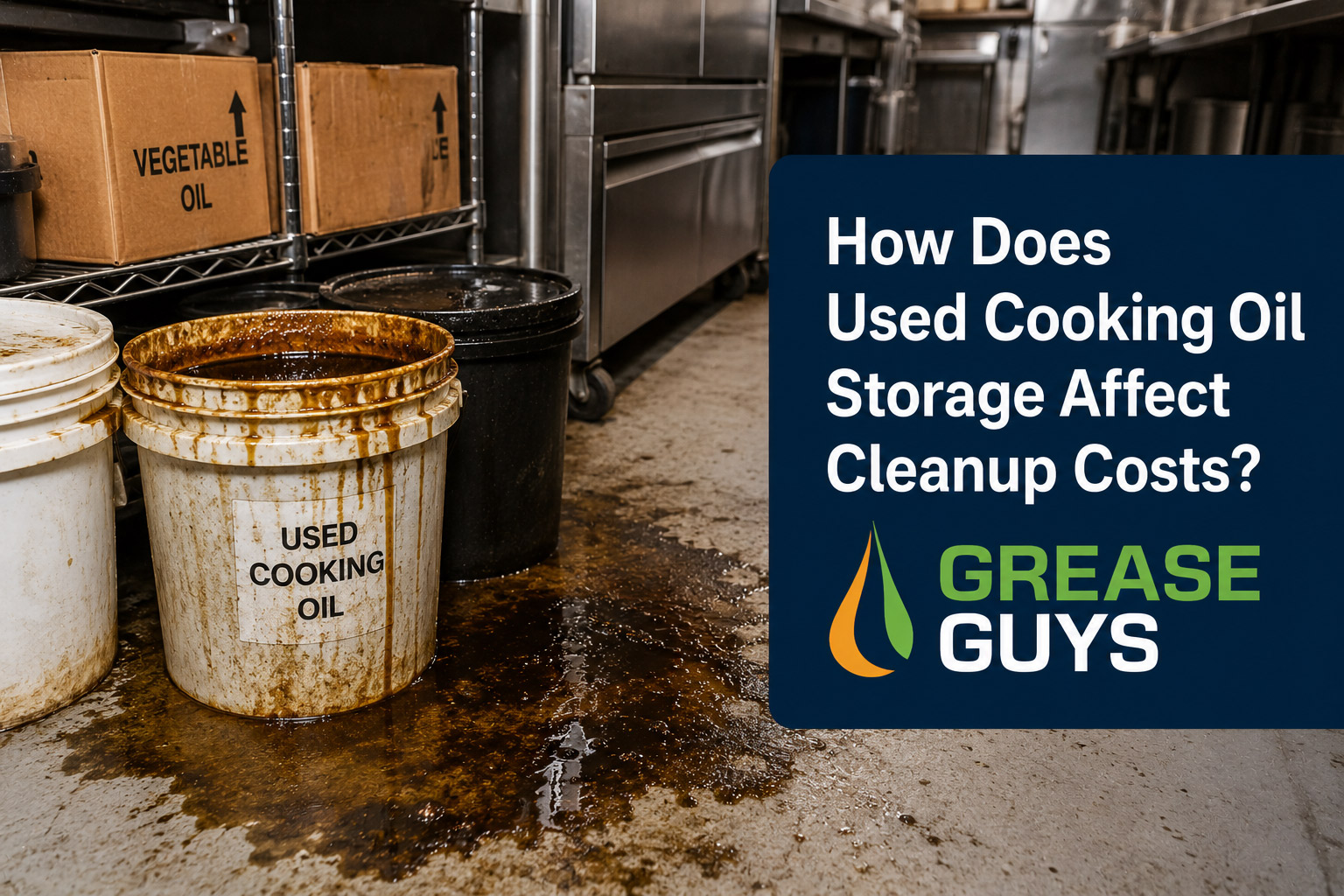
How Does Used Cooking Oil Storage Affect Cleanup Costs?
A Small Storage Problem Can Turn Into a Major Cleanup Job
A restaurant may only spill a small amount of used cooking oil at first. Maybe a lid was not sealed properly, a container overflowed during a busy shift, or oil slowly leaked underneath a storage bin without anyone noticing immediately.
The problem is that cooking oil spreads fast once it reaches floors, pavement, or drainage areas. What starts as a minor storage issue can quickly become a larger cleanup problem involving slippery surfaces, strong odors, stained concrete, clogged drains, or environmental concerns.
Many restaurants in Washington focus mainly on oil pickup schedules but overlook how storage conditions affect long-term maintenance and cleanup costs. The type of container being used, where the oil is stored, how often pickups happen, and how staff handle disposal all influence whether the system stays manageable or turns into a recurring mess.
In many cases, cleanup costs are not caused by the oil itself. They come from poor storage habits that allow leaks, overflow, or contamination to develop over time.
Why Used Cooking Oil Becomes Difficult to Clean Up
Cooking oil behaves differently from water-based spills.
Once oil reaches floors or outdoor surfaces, it creates a slippery coating that spreads easily and clings to surrounding materials. If the spill is not handled quickly, the cleanup process becomes more complicated and expensive.
Oil Spreads Into Large Surface Areas
Even a relatively small amount of used cooking oil can travel across wide sections of flooring or pavement.
Inside kitchens, oil may move underneath equipment, into grout lines, or toward floor drains. Outside, rainwater can carry oil across parking lots, sidewalks, or loading areas.
The larger the affected area becomes, the more labor and cleaning materials are usually required.
Oil Absorbs Into Porous Surfaces
Concrete, asphalt, and certain flooring materials absorb oil over time.
Once that happens, cleanup often involves more than simply wiping the surface. Pressure washing, degreasing treatments, or repeated cleaning may be necessary to reduce staining and residue buildup.
Washington restaurants that store oil outdoors often deal with this problem when containers leak slowly onto pavement for extended periods.
Grease Residue Creates Ongoing Safety Problems
Used cooking oil leaves behind slippery residue even after the visible spill appears cleaned.
This can create ongoing slip hazards for employees, delivery drivers, or customers. Businesses may need additional cleaning efforts to fully remove the residue and restore safe walking surfaces.
Storage Container Condition Plays a Major Role
The condition of the oil storage container itself heavily affects the risk of leaks and cleanup issues.
Damaged Containers Increase Leak Risk
Old or damaged containers may develop cracks, loose seals, or structural weaknesses that allow oil to escape slowly over time.
Some businesses continue using containers long after they begin deteriorating because the leak initially appears minor. Unfortunately, slow leaks often go unnoticed until the surrounding area becomes heavily contaminated.
Cleanup costs tend to increase significantly once oil spreads beneath storage areas or into nearby drainage systems.
Overflow Problems During Busy Periods
Restaurants generating large amounts of used cooking oil can experience overflow problems if storage capacity becomes insufficient.
This often happens during:
Holiday rush periods
High-volume weekends
Seasonal traffic increases
Delayed pickup schedules
When storage tanks or bins exceed capacity, oil may spill during disposal or overflow directly from the container.
Overflow cleanup is usually more expensive than routine maintenance because larger surface areas become affected quickly.
Poorly Sealed Lids Allow Additional Problems
Loose or improperly secured lids create several issues beyond simple spills.
Open containers may allow:
Rainwater intrusion
Pest activity
Strong odors
Oil contamination
Overflow acceleration during storms
Outdoor oil storage in Washington becomes especially problematic during wet weather if containers are not sealed correctly.
Storage Location Can Increase Cleanup Difficulty
Where the used cooking oil is stored affects how easy spills are to contain and clean.
Indoor Storage Risks
Indoor storage areas can become difficult to clean if oil reaches kitchen flooring, storage rooms, or employee walkways.
Oil may spread underneath heavy equipment or into drainage systems before staff notice the issue. Cleanup becomes more labor-intensive once the spill reaches hard-to-access areas.
Restaurants may also need temporary operational adjustments while cleanup is completed safely.
Outdoor Storage Challenges
Outdoor storage introduces different risks.
Oil spills outside can spread across:
Pavement
Sidewalks
Loading zones
Dumpster areas
Storm drain surroundings
Rain can carry oil further from the original source, increasing the cleanup area significantly.
In Washington commercial areas with regular rainfall, even a moderate spill can become much harder to control outdoors.
Pickup Frequency Affects Spill and Overflow Risks
Used cooking oil storage systems work best when pickups match the actual volume of oil being produced.
When containers remain full for too long, the likelihood of spills increases substantially.
Delayed Pickups Increase Overflow Potential
Restaurants producing heavy fryer output may fill containers faster than expected during busy periods.
If pickups are delayed too long, staff may struggle to dispose of oil safely without overfilling the container. This often leads to spills around lids, access points, or nearby surfaces.
The cleanup costs associated with repeated overflow incidents can add up quickly over time.
Excess Oil Around Storage Areas Attracts Additional Problems
Oil residue near storage containers can attract insects, create unpleasant odors, and contribute to sanitation concerns.
Once buildup accumulates around the storage area regularly, businesses may need more extensive pressure washing or degreasing services to restore the area properly.
Poor Staff Handling Often Contributes to Cleanup Costs
Even well-designed storage systems can become messy if kitchen disposal practices are inconsistent.
Improper Oil Transfer Methods
Transporting hot oil carelessly increases the chance of spills.
Restaurants sometimes use temporary containers, overfilled buckets, or unstable transfer methods during busy shifts. Small spills during daily disposal can gradually build up around the storage area over time.
Lack of Spill Response Procedures
Some businesses do not have clear cleanup procedures for oil spills.
When staff delay cleanup or use improper cleaning materials, oil may spread further before containment begins.
Quick response often makes the difference between a manageable spill and a larger cleanup project.
How Restaurants Can Reduce Used Cooking Oil Cleanup Costs
Most cooking oil cleanup problems are preventable with better storage management and consistent maintenance.
Use Proper Storage Containers
Containers should remain structurally sound, sealed properly, and sized appropriately for the kitchen’s oil volume.
Damaged or undersized storage systems should be replaced before leaks develop.
Match Pickup Schedules to Oil Production
Restaurants should adjust pickup frequency based on actual usage rather than relying on outdated schedules.
High-volume Washington kitchens may require more frequent service during peak seasons.
Keep Storage Areas Clean
Regularly inspecting and cleaning the surrounding storage area helps identify small leaks before they become major cleanup issues.
Early maintenance usually costs far less than large spill remediation.
Train Staff on Safe Oil Handling
Kitchen employees should understand proper disposal procedures and spill response protocols.
Simple operational habits can reduce unnecessary spills significantly over time.
Frequently Asked Questions About Used Cooking Oil Cleanup
Why are used cooking oil spills expensive to clean?
Oil spreads quickly, absorbs into surfaces, creates slippery residue, and often requires specialized degreasing or pressure washing.
Can outdoor oil storage increase cleanup costs?
Yes. Rainwater can spread oil across larger outdoor areas, making spills harder to contain and clean.
How do delayed oil pickups affect spills?
When containers remain too full for too long, the risk of overflow and accidental spills increases substantially.
Can damaged storage containers leak slowly over time?
Yes. Small cracks, loose seals, and worn containers can create gradual leaks that become expensive cleanup problems later.
How can restaurants reduce used cooking oil cleanup costs?
Proper storage containers, regular pickups, clean storage areas, and staff training all help reduce spill risks and cleanup expenses.
Conclusion
Used cooking oil storage affects much more than simple organization behind a restaurant. Poor storage practices can lead to leaks, overflow, slippery surfaces, drainage problems, and larger cleanup costs that disrupt daily operations.
For restaurants and food service businesses in Washington, maintaining clean and properly managed oil storage systems can help reduce long-term maintenance issues and prevent unnecessary cleanup expenses. Consistent pickup scheduling and proper handling procedures often make a significant difference over time.
Grease Guys works with commercial kitchens throughout Washington to help manage used cooking oil collection and reduce the risk of storage-related cleanup problems.

OUR SERVICES
TIPS & ARTICLE
GET IN TOUCH
Phone: (855) 227-6060
Email: [email protected]
Address: 3188 Road M.2 NE, Moses Lake, WA 98837
Business Hours:
Mon - Sun: Open 24 Hours
AREAS WE SERVE
© All Rights Reserved • Grease Guys, LLC | Terms of Use | Privacy Policy