
Call Us Today!
Blog
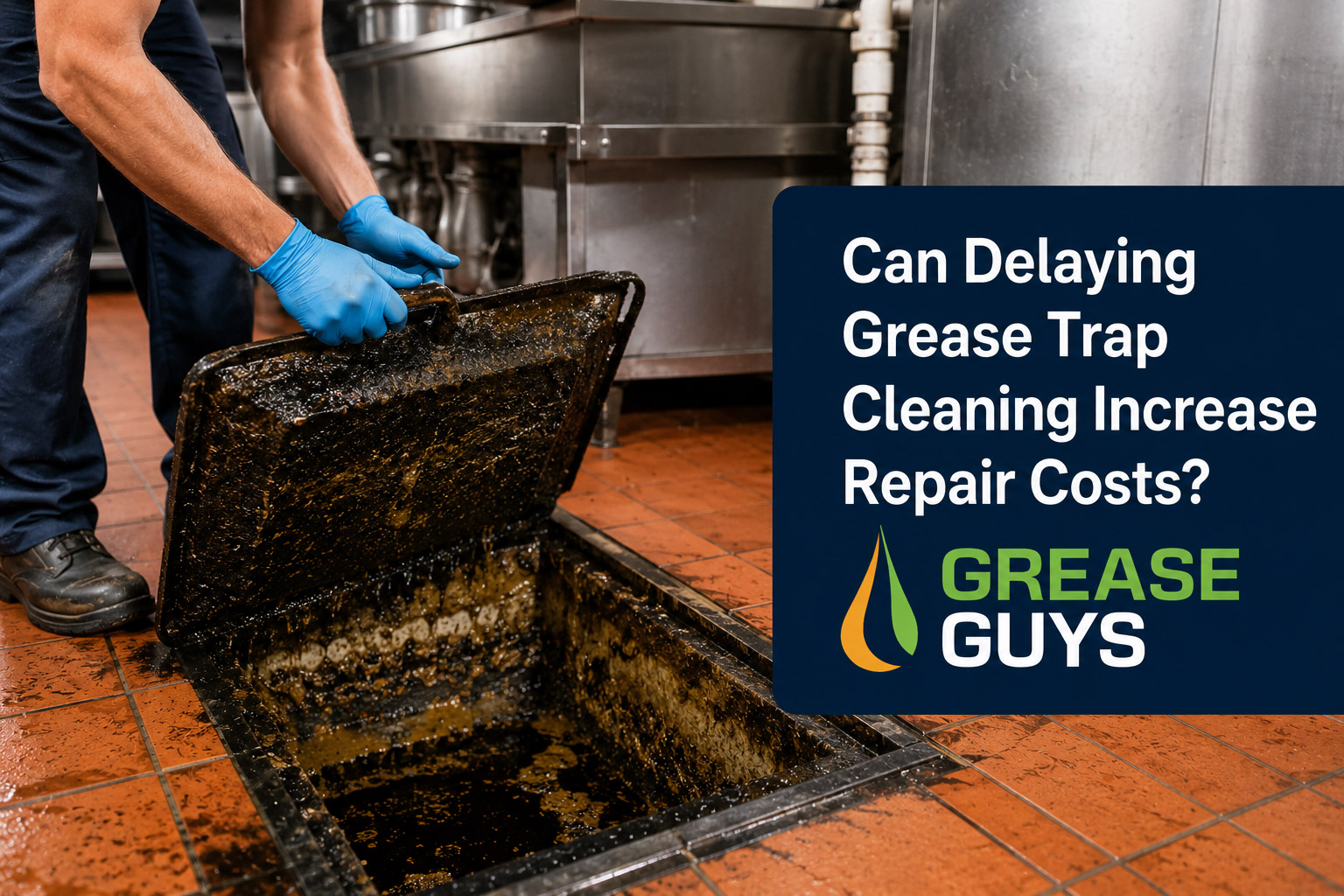
Can Delaying Grease Trap Cleaning Increase Repair Costs?
Why Small Grease Problems Often Turn Into Bigger Repairs
A grease trap usually does its job quietly in the background. Kitchen staff may not think much about it unless there is a bad smell, a slow drain, or a plumbing backup. Because of that, many restaurants and commercial kitchens delay grease trap cleaning longer than they should, especially during busy seasons.
At first, postponing service may seem like a way to save money. The trap is still draining, the sinks still work, and operations continue as usual. But in many Washington commercial kitchens, delayed grease trap maintenance is exactly what leads to expensive plumbing repairs, emergency service calls, and even temporary shutdowns.
Grease buildup does not stay contained neatly inside the trap forever. Over time, fats, oils, and grease begin affecting nearby pipes, drainage flow, and kitchen operations. What could have been handled through routine maintenance can eventually turn into damaged plumbing, wastewater overflow, or equipment replacement.
Understanding how these problems develop can help restaurant owners and kitchen managers avoid larger repair costs later.
How Delayed Grease Trap Cleaning Causes Damage
Grease traps are designed to separate fats, oils, and grease from wastewater before those materials enter the plumbing system. The problem starts when the trap reaches capacity and continues collecting waste without proper pumping or cleaning.
Once buildup becomes excessive, the system starts working less efficiently.
Restricted Drain Flow
One of the earliest signs of a neglected grease trap is slower drainage. Water may begin pooling in sinks or floor drains because grease accumulation reduces the available space inside pipes and the trap itself.
This issue usually develops gradually. Staff members may barely notice the slowdown at first, but over time, kitchen operations become less efficient. Dishwashing areas, prep sinks, and cleaning stations may all experience drainage delays.
If ignored, pressure can build inside the plumbing system and eventually create backups.
Grease Overflow Into Plumbing Lines
When grease traps become overloaded, fats and oils can bypass the system entirely and move into sewer lines.
Unlike hot cooking oil in a fryer, grease inside plumbing cools and hardens. This creates thick buildup along pipe walls. Over time, pipes become narrower and more difficult to clear.
In Washington restaurants with high kitchen output, this can become especially expensive because commercial plumbing systems often handle large wastewater volumes every day.
Once grease reaches deeper sections of the plumbing system, repairs may involve:
Hydro jetting
Pipe descaling
Drain line excavation
Pipe replacement
Emergency plumbing service
Those repair costs are usually much higher than routine grease trap maintenance.
Increased Risk of Emergency Shutdowns
Overflowing grease traps can create sanitation and safety problems inside a kitchen.
Water backups near food prep areas can create health code violations, slip hazards, and contamination concerns. In some cases, restaurants may need to temporarily stop operations until the issue is resolved.
Emergency service calls also tend to cost more because they happen outside scheduled maintenance windows. Nights, weekends, and urgent plumbing situations typically involve higher labor and equipment charges.
For busy Washington food service businesses, even a short closure can mean lost revenue during peak operating hours.
Why Repair Costs Escalate So Quickly
Grease-related plumbing damage often spreads beyond the original problem area. What starts inside the trap can affect multiple systems throughout the kitchen.
The longer buildup remains untreated, the more complicated repairs become.
Minor Cleaning vs Major Plumbing Work
The difference in cost between preventive maintenance and emergency repair is often substantial.
Routine grease trap cleaning in Washington is generally predictable and manageable. Emergency plumbing failures are not.
Equipment Strain Inside Commercial Kitchens
Grease buildup does not only affect pipes. It can also place stress on connected kitchen systems.
Dishwashers, floor drains, sink lines, and wastewater pumps may all work harder when drainage becomes restricted. Water may drain more slowly, leaving standing moisture in areas designed for rapid flow.
Over time, this added strain can contribute to premature equipment wear.
Kitchen managers sometimes replace equipment without realizing the underlying grease issue caused the problem in the first place.
Structural and Property Damage
In severe situations, grease overflows can damage floors, walls, and nearby materials.
Standing wastewater can seep into grout, flooring, or lower wall sections. Persistent moisture may also create odor problems that are difficult to remove completely.
If wastewater reaches customer-facing areas, the cleanup process becomes even more disruptive.
These secondary repair costs are often overlooked when businesses postpone grease trap service.
What Causes Some Kitchens to Need More Frequent Cleaning?
Not every commercial kitchen produces grease at the same rate. Cleaning frequency depends heavily on the type of food operation and kitchen volume.
A small café and a busy fried chicken restaurant will not generate the same amount of grease waste.
Several factors increase buildup speed.
High-Volume Frying Operations
Restaurants that regularly fry foods usually accumulate grease faster than kitchens focused on baking or cold preparation.
Cooking oils, fryer runoff, and food particles all contribute to faster trap saturation.
Washington restaurants with heavy lunch and dinner traffic often require more frequent service simply because their wastewater load is higher.
Poor Scraping and Disposal Habits
Kitchen staff practices also affect grease trap performance.
When food scraps, sauces, and oils are rinsed directly into sinks, traps fill more quickly. Even well-designed systems can become overwhelmed if too much solid waste enters the drainage system.
Simple operational habits can significantly extend or reduce maintenance intervals.
Seasonal Demand Changes
Some Washington restaurants experience large seasonal traffic increases. Tourist seasons, sporting events, or holiday periods can dramatically increase kitchen output.
A grease trap schedule that worked during slower months may no longer be sufficient during peak business periods.
This is one reason many businesses suddenly experience backups during their busiest times of year.
How Restaurants Can Reduce Long-Term Repair Costs
Preventing grease-related damage is usually more about consistency than complexity.
Regular maintenance helps businesses avoid larger disruptions later.
Follow a Realistic Cleaning Schedule
Grease trap cleaning schedules should reflect actual kitchen usage, not just minimum recommendations.
A lightly used kitchen may manage with less frequent service, while high-output operations may require pumping more often.
Monitoring grease accumulation levels can help determine the right interval before problems develop.
Watch for Early Warning Signs
Many costly plumbing repairs begin with smaller warning signs that get ignored.
Common indicators include:
Slow-draining sinks
Gurgling drains
Strong grease odors
Frequent drain clogs
Water backups near floor drains
Responding early is usually much less expensive than waiting for a complete blockage.
Train Staff on Grease Management
Kitchen operations play a major role in grease buildup.
Training staff to scrape plates properly, dispose of oil correctly, and reduce food waste entering drains can improve system performance significantly.
Even small operational changes can reduce grease accumulation over time.
Work With Scheduled Maintenance Instead of Emergencies
Emergency service is unpredictable and disruptive. Scheduled maintenance is easier to budget and plan around.
Restaurants that maintain regular grease trap cleaning in Washington often reduce the likelihood of surprise plumbing costs and downtime.
Consistent service also makes it easier to spot developing issues before they become serious repairs.
Frequently Asked Questions About Grease Trap Cleaning
How often should a grease trap be cleaned?
The ideal schedule depends on kitchen volume, food type, and grease production. High-volume Washington restaurants may require more frequent service than smaller food businesses.
What happens if a grease trap is not cleaned?
Grease buildup can cause slow drains, sewer backups, foul odors, plumbing damage, and possible health code violations.
Can grease buildup damage pipes permanently?
Yes. Hardened grease can restrict flow, increase pressure, and contribute to pipe deterioration over time. Severe buildup may eventually require pipe repair or replacement.
Why do emergency grease trap problems cost more?
Emergency repairs often involve urgent labor, after-hours service, larger plumbing issues, and business interruption costs that routine maintenance helps avoid.
Can grease trap problems shut down a restaurant?
In some cases, yes. Severe backups, wastewater overflow, or sanitation concerns can temporarily interrupt kitchen operations until repairs are completed.
Conclusion
Delaying grease trap cleaning may seem minor at first, but the long-term costs can grow quickly once grease buildup begins affecting plumbing systems, drainage flow, and kitchen operations. Many expensive repairs start with smaller warning signs that were ignored for too long.
For restaurants and commercial kitchens in Washington, consistent maintenance is often the most practical way to avoid emergency plumbing issues and unexpected downtime. Regular service also helps kitchens stay cleaner, safer, and easier to operate during busy periods.
Grease Guys works with food service businesses throughout Washington to help keep grease traps and used cooking oil systems maintained before larger problems develop.

OUR SERVICES
TIPS & ARTICLE
GET IN TOUCH
Phone: (855) 227-6060
Email: [email protected]
Address: 3188 Road M.2 NE, Moses Lake, WA 98837
Business Hours:
Mon - Sun: Open 24 Hours
AREAS WE SERVE
© All Rights Reserved • Grease Guys, LLC | Terms of Use | Privacy Policy